The LinkedIn Compounding Effect: Why 90 Days of Consistency Beats One Viral Post
TL;DR: A single viral LinkedIn post gives you a spike in impressions and a brief dopamine hit. Ninety days of consistent posting gives you a warm audience, a library of intent signals, and a pipeline that grows without you manually sourcing every lead. This article explains the mechanics of LinkedIn compounding and how to build it without burning out.
Ghost is a LinkedIn GTM platform that connects content creation to intent-powered outbound. Everything in this article — the content, the intent signals, the outbound — runs through one platform, on one plan, at $99/month.
Why Founders Chase Virality and Miss the Point
A post hits 50,000 impressions. Notifications flood in. You feel like you've cracked LinkedIn. Then Monday arrives, the algorithm moves on, and your pipeline looks exactly the same as it did last week.
Virality is a vanity metric dressed up as a growth strategy. The founders who build real pipeline from LinkedIn aren't the ones who went viral once — they're the ones who showed up every week for six months and let the platform's mechanics work in their favour.
The problem is that virality is visible and compounding is invisible. You can screenshot 50K impressions. You can't screenshot the fact that a procurement director at a mid-market SaaS company has now seen your name eleven times this quarter and considers you a credible voice before you've ever sent them a message.
Founder's Take: I've watched founders spend two weeks crafting a post they hoped would go viral, get 200 likes, call it a failure, and quit. Meanwhile, the founders posting three times a week with zero viral posts are booking discovery calls from people who say "I've been following you for a while." That's the compounding effect. It's quiet, it's slow, and it absolutely works.
The Compounding Mechanics — How LinkedIn Rewards Consistency
LinkedIn's algorithm isn't random. It rewards accounts that generate consistent engagement signals over time — not one-off spikes. Here's what's actually happening under the hood.
When you post regularly, LinkedIn learns which audiences engage with your content. It starts distributing your posts to a slightly wider version of that audience each time. According to LinkedIn's own engineering blog, accounts that post at least three times per week see 5x more profile views than those posting once a week or less. That reach compounds: more views mean more followers, more followers mean more initial engagement on your next post, which means wider distribution again.
There's a second mechanic that most founders miss entirely: content shelf life. A LinkedIn post doesn't die at 24 hours. If it keeps getting engagement — comments, saves, shares — the algorithm continues distributing it for days or weeks. A consistent posting cadence means you always have multiple posts in active circulation simultaneously, each one pulling in new profile visitors.
The third mechanic is social proof accumulation. When a prospect visits your profile after seeing your post, they don't just see that post — they see a feed of relevant, consistent content. That transforms a cold profile visit into a warm consideration. A founder posting three times a week for 90 days has 36+ posts on their profile. A founder who went viral once has one.
What Your Network Looks Like at Day 30, Day 60, Day 90
This is the trajectory most founders don't see because they quit before they reach it.
Day 30: You're building the habit, not the audience
At day 30, your numbers probably look unimpressive. Impressions are modest, follower growth is slow, and engagement feels like it's coming from the same ten people. This is normal. You're training the algorithm and establishing your content identity. The audience isn't there yet — but the foundation is being laid.
Day 60: The algorithm starts trusting you
By day 60, something shifts. LinkedIn has enough data on your account to distribute your posts more confidently. You'll notice your average impressions per post climbing — not dramatically, but consistently. New followers start appearing who you don't recognise, which means your content is reaching beyond your immediate network. Inbound connection requests from your ICP begin to tick up.
Day 90: Intent signals become a pipeline asset
At day 90, you have a warm audience that has seen your thinking repeatedly. Some of them have liked multiple posts. Some have commented. Some have visited your profile three times without connecting. These are not cold prospects — they're warm leads who have self-selected into your world. This is the point at which consistent content stops being a brand exercise and starts being a pipeline engine.
A SaaS founder selling HR software who posts three times a week for 90 days will have generated hundreds of trackable engagement signals from people inside their ICP. That's not a vanity metric. That's a prospecting list that built itself.
The Intent Signal Compound: How Consistent Content Generates Better Outbound Over Time
Here's where the LinkedIn consistency strategy gets genuinely powerful — and where most advice stops short.
Every like, comment, and profile view your content generates is an intent signal. Someone who liked your post about HR compliance automation is telling you something about their priorities without saying a word. Someone who commented "this is exactly what we're dealing with right now" is practically raising their hand.
The compound effect here is multiplicative. At day 30, you might have 50 intent signals. At day 60, you have 200. At day 90, you have 500+. But crucially, the quality of those signals improves over time too — because your content gets more targeted as you learn what resonates with your ICP, and the people engaging with it become more precisely aligned with who you want to sell to.
Ghost scores every engagement signal across five dimensions and surfaces the warmest leads automatically. Instead of manually scrolling through your post notifications trying to remember who liked what, you get a ranked list of warm prospects ready for outbound — with their verified contact details already attached.
How to do this in Ghost: 1. Connect your LinkedIn account and set your ICP filters (role, industry, company size, seniority). 2. Ghost automatically tracks every like, comment, and profile view on your content and scores each signal. 3. Navigate to your Intent Feed to see your warmest leads ranked by engagement depth. 4. Click any contact to see their full profile, verified email, and LinkedIn URL. 5. Enrol them directly into a multi-channel outbound sequence — LinkedIn message + email — without leaving Ghost.
This is the part that turns content into revenue. Without intent tracking, your 90 days of consistency generates warm leads you never act on. With it, every post is quietly building a prospecting queue that gets warmer the longer you post.
How to Maintain Consistency Without Burnout
The number one reason founders abandon their LinkedIn consistency strategy isn't lack of motivation — it's lack of a system. Writing three posts a week from scratch, every week, indefinitely, is genuinely exhausting. So don't do it that way.
Batch your content in 90-minute sessions
Set aside one 90-minute block per week — not per post. In that session, write or review drafts for the entire week. You're not in "creative mode" three times a week; you're in creative mode once, producing in bulk. Most founders find this dramatically reduces the cognitive load of consistency.
Build a content pillar framework
Rotate across three to four content pillars so you're never staring at a blank page wondering what to write about. For a founder selling HR software, those pillars might be: compliance insights, hiring trends, team culture lessons from their own company, and product-adjacent use cases. Every post fits one pillar. Decision fatigue eliminated.
Repurpose ruthlessly
A LinkedIn post that performed well can become a thread, a carousel, a newsletter section, and a comment on someone else's post. A 30-minute podcast appearance can become four LinkedIn posts. You're not generating new ideas every time — you're finding new angles on ideas that already work.
Use AI to draft, human to edit
The fastest founders using Ghost's AI content engine aren't letting AI write their posts wholesale — they're using it to generate a first draft trained on their voice, then spending ten minutes editing it into something that sounds genuinely like them. That workflow turns a 45-minute writing session into a 15-minute editing session.
Ghost's Role in the Long Game
Consistency compounds. But compounding only pays off if you capture the value it creates. That's the gap Ghost closes.
Most founders post consistently for 90 days, generate real intent signals, and then… do nothing with them. They don't have a system for identifying who engaged, enriching their contact data, and converting that warm attention into an outbound touchpoint. The content does the work and the leads evaporate.
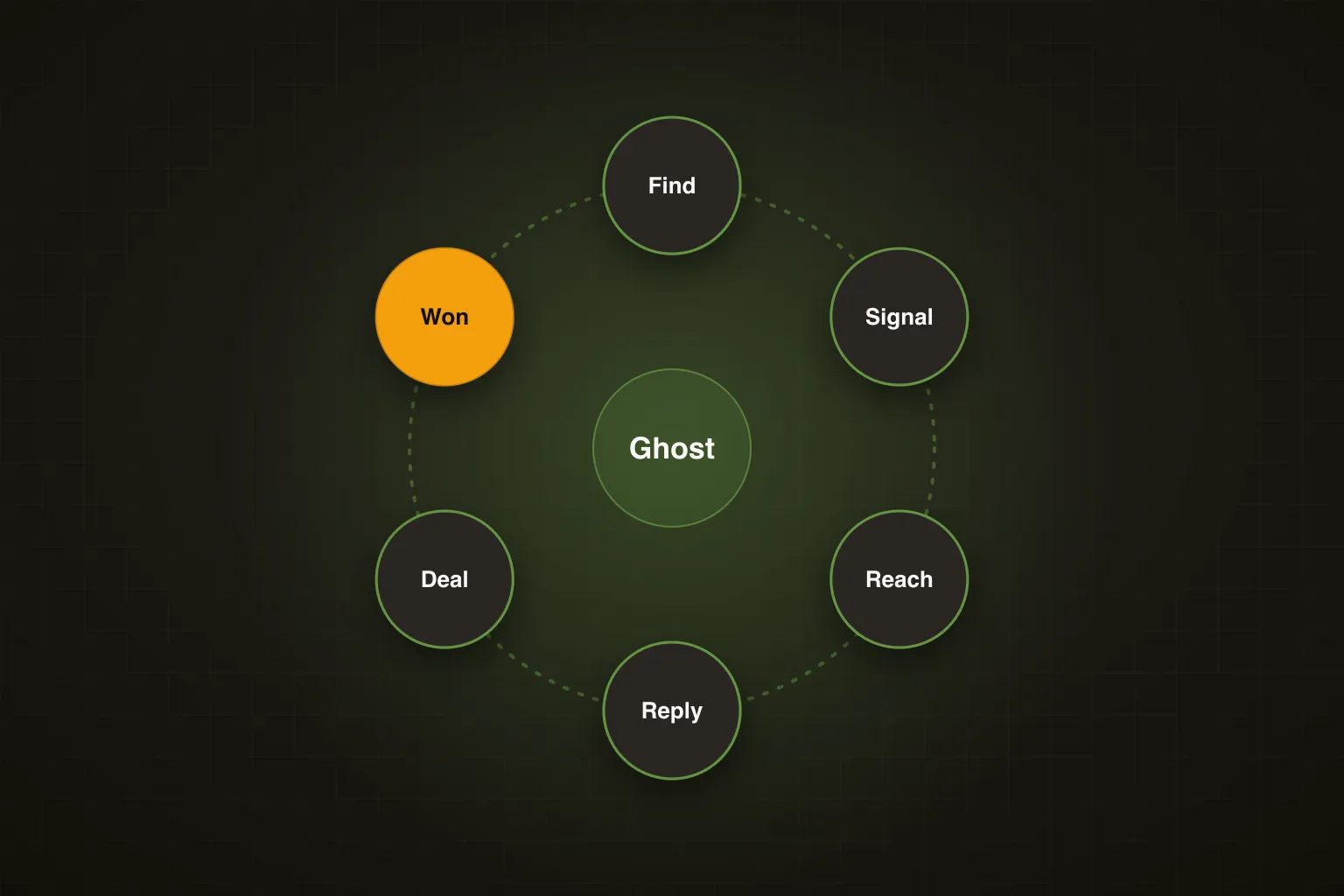
Ghost's full platform is built specifically for this loop: you create content, Ghost tracks who engages with it, scores their intent, surfaces them as warm leads, and lets you enrol them in a personalised multi-channel sequence — LinkedIn message and email — in a single workflow. The 600M contact database means Ghost already has verified contact details for most of the people engaging with your posts. No manual research, no export-import between tools.
At $99/month with no credit system and no per-lookup fees, the entire loop — content, intent, outbound — runs on one plan. Compare that to paying separately for a content scheduler, a data provider, and a sequencing tool, and you'll understand why founders who try Ghost rarely go back to the stack.
Frequently Asked Questions
How long does it take to see results from a LinkedIn consistency strategy?
Most founders start seeing meaningful changes in their engagement and follower growth between weeks six and eight of consistent posting. Pipeline impact — inbound enquiries, warm leads engaging with outreach — typically becomes visible around the 90-day mark. The first 30 days are almost always slow, and quitting during that period is the single biggest mistake founders make.
How often should I post on LinkedIn to see the compounding effect?
Three to five times per week is the sweet spot for most founders. Fewer than three posts per week slows algorithm trust-building significantly. More than five per day risks audience fatigue and diminishing returns per post. Three posts per week for 90 days gives you 36+ pieces of content in circulation and a statistically meaningful set of intent signals to work with.
What is the LinkedIn compounding effect?
The LinkedIn compounding effect refers to the way consistent content creation generates accelerating returns over time — more followers, higher average reach per post, and a growing pool of warm intent signals from engaged prospects. Unlike a single viral post, which produces a temporary spike, compounding builds an audience that grows on itself, where each new follower increases the initial distribution of every future post.
Why does one viral post not generate sustainable pipeline?
A viral post generates impressions from a broad, often poorly targeted audience. The engagement spike is real, but it doesn't persist — LinkedIn's algorithm moves on within 48–72 hours, and most of the people who saw the post have no memory of your name a week later. Sustainable pipeline comes from repeated exposure to a targeted audience, which is only possible through consistent posting over time.
How do I stay consistent on LinkedIn without spending hours every week?
The key is batching: write all of your week's content in a single 90-minute session rather than producing each post individually. Pair this with a content pillar framework (three to four recurring themes) so you're never starting from a blank page. AI drafting tools — like Ghost's content engine — can further reduce the time per post to under 15 minutes of editing work.
What are LinkedIn intent signals and why do they matter for outbound?
LinkedIn intent signals are engagement actions — likes, comments, profile views, post saves — that indicate a prospect's interest in your content and, by extension, your area of expertise. They matter for outbound because they convert cold prospects into warm ones: someone who has liked three of your posts about SaaS onboarding is significantly more likely to respond to an outreach message than someone who has never heard of you. Intent signals let you prioritise outbound effort on prospects who are already paying attention.
How do I convert LinkedIn engagement into booked meetings?
The process is: identify who engaged with your content, enrich their contact data (email + LinkedIn URL), and send a personalised outreach message that references their engagement or the topic they engaged with. The message doesn't need to be complex — acknowledging that they engaged and opening a relevant conversation is enough. Ghost automates the identification and enrichment steps, so you're only writing the outreach.
Is LinkedIn consistency more important than LinkedIn content quality?
Both matter, but consistency is the prerequisite. A high-quality post published once a month will underperform a good-enough post published three times a week, because the algorithm rewards frequency and the audience rewards familiarity. That said, consistent low-quality content will plateau quickly. The winning combination is consistent posting with a clear point of view — not polished perfection, but genuine, relevant perspective delivered regularly.
If you've been posting sporadically and wondering why LinkedIn isn't moving the needle, the answer isn't a better post — it's a better system. Ghost gives you the AI content engine to stay consistent, the intent tracking to know who's warming up, and the multi-channel outbound to convert that attention into pipeline. Start your free 7-day trial at growwithghost.io — no credit card required.