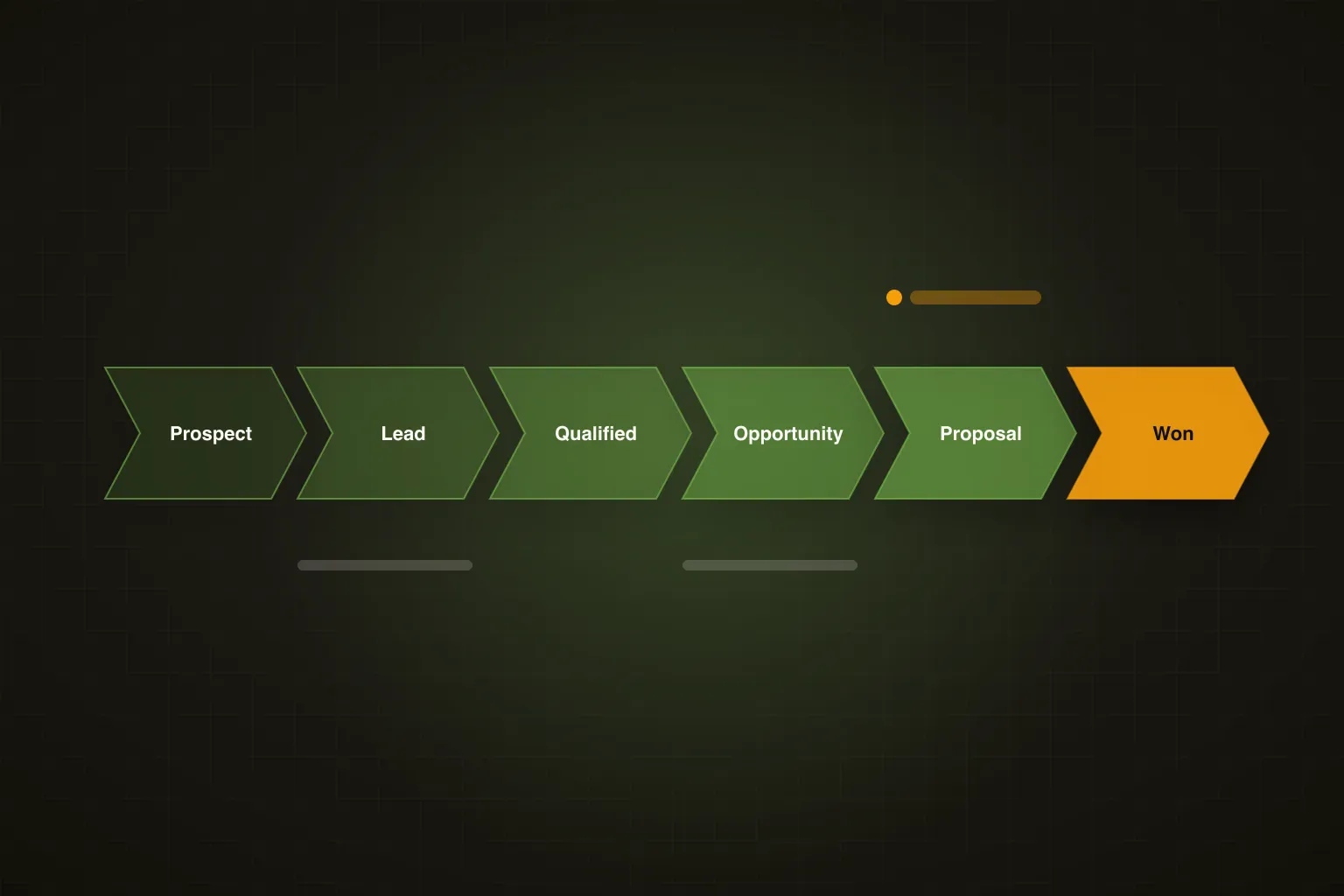
TL;DR: Most pipeline templates were designed for inbound and phone-led sales. Warm LinkedIn outbound moves differently: signals come first, replies are the real entry point, and deals die quietly rather than with a no. Here's a six-stage pipeline built for that motion, with clear entry and exit criteria, the rules that can move deals automatically, and the thresholds that tell you a deal is stuck.
Why generic pipelines break for LinkedIn selling
Classic pipelines start with a form fill or a cold call. LinkedIn-first selling starts earlier and messier: someone likes a post, views your profile, engages with a competitor, then replies to a message three weeks later. If your stages don't reflect that, you end up with a "Lead" column holding everyone you've ever messaged and no idea who's actually warm.
The fix is to define each stage by an observable event, not a feeling.
The six stages
| Stage | Enters when | Leaves when |
|---|---|---|
| Prospect | You've identified them as worth pursuing: ICP fit, a signal, or a warm introduction | They reply to outreach |
| Lead | They reply to a campaign, or send an enquiry | They show real intent, or go quiet |
| Qualified | High-intent reply: a problem, a timeline, a question about price or fit | A call or meeting is booked |
| Opportunity | A discovery call is booked or held and there's a defined need | You send a proposal |
| Proposal | Pricing or a proposal has been sent | They sign, or decline |
| Won / Lost | A decision is made. Record the value and the reason either way | — |
The Lost reason matters as much as the Won value. After twenty losses, "no budget" versus "went with a competitor" versus "timing" tells you whether to fix targeting, positioning or follow-up.
Let replies move the deal for you
The two most important transitions, Prospect to Lead and Lead to Qualified, are both triggered by something the prospect writes. That means they can be automated. In Ghost Pipeline:
- A reply to one of your campaigns adds the person as a Lead
- A high-intent conversation or hot-lead reply moves them to Qualified
- Enquiries from your connected inbox appear as suggested leads with a suggested stage
- If someone already in your contacts emails asking for a call, meeting or proposal, their deal moves up a stage
Two rules keep this trustworthy: automatic moves never push a deal backwards, and they never reopen a Won or Lost deal. Everything from Opportunity onwards stays manual, because those moves depend on conversations the system can't hear, like a call.
Where deals actually die
In warm outbound, deals rarely get a clear no. They stall. Two thresholds catch most of it:
- No contact for 5 days on an open deal. Warm interest decays fast. After five days of silence you're rebuilding momentum, not continuing it.
- 14 days in the same stage. If a deal hasn't moved in two weeks, either the next step wasn't clear or the priority dropped. Both need a message.
Ghost creates reminders at exactly these points by default, plus when an expected close date passes, and you can adjust the day counts to match your sales cycle. The 8am digest lists what's due so nothing depends on memory.
Founder's Take: Most founders think their pipeline problem is top of funnel. Look at where deals sit for more than two weeks and you'll often find the real leak is between Qualified and Opportunity, a follow-up that never went out.
Three numbers to watch
- Win rate: won versus lost. Track it monthly, not per deal.
- Average days to close: if this rises, your follow-up cadence is slipping or deals are entering too early.
- Revenue by source: which campaigns, signals and manual entries produced won deals. This is the one that changes what you do next month.
Adapting the stages
Treat the six stages as a default, not a rulebook. Consultancies often split Proposal into Proposal and Negotiation. Agencies may add a Pilot stage. Productised services sometimes merge Opportunity and Proposal. In Ghost you can rename, reorder, recolour or add stages in Pipeline → Settings. Keep every stage defined by an event you can observe, and the pipeline stays honest.
Frequently Asked Questions
How many pipeline stages should a founder use?
Five to seven. Fewer and you can't see where deals stall; more and nobody keeps them updated.
Should every LinkedIn connection be in the pipeline?
No. Connections and engagers are prospects at most. A deal starts when there's a two-way conversation, which is why a reply is the natural trigger for Lead.
What's the difference between Lead and Qualified?
A Lead has replied. A Qualified deal has shown intent: a stated problem, a timeline, or a question about price or fit.
Pipeline is included on every Ghost plan. Start your 7-day free trial at growwithghost.io, or see how Pipeline works.