TL;DR: A LinkedIn email multi-channel sequence combines LinkedIn connection requests, direct messages, and email follow-ups into one coordinated outreach flow. Ghost lets you build, launch, and manage this entire sequence in a single workflow — no stitching together separate tools, no manual handoffs.
Ghost is the all-in-one GTM platform for B2B founders and small revenue teams: an AI SDR, a 600M-contact database, LinkedIn + email outreach and a built-in CRM on one plan. That means when you run outbound in Ghost, you're not just blasting cold messages — you're reaching people who've already seen your content, engaged with your posts, or match your ICP down to job title and tech stack.
This guide walks you through the exact steps to build a five-touch LinkedIn + email sequence inside Ghost, from the first connection request to the final email.
Why Multi-Channel Beats LinkedIn-Only or Email-Only
If you're only doing LinkedIn outreach, you're leaving a significant portion of your pipeline on the table. LinkedIn-only sequences cap out at around 100 connection requests per week — that's a hard platform limit. Email-only sequences miss the relationship-building that LinkedIn enables. Combine them, and you unlock both reach and warmth.
According to research by Outreach.io, multi-channel sequences generate up to 3x more replies than single-channel outreach. The reason is simple: different people live in different inboxes. A CFO at a 50-person SaaS company might ignore cold email entirely but reply to a thoughtful LinkedIn message within hours.
The other reason multi-channel works is repetition without annoyance. Seeing your name on LinkedIn, then in their inbox, then on LinkedIn again — across 10–14 days — creates familiarity. You're not spamming. You're showing up where they already are.
Founder's Take: The single biggest mistake I see founders make with outbound is picking a lane — LinkedIn or email — and sticking to it religiously. The prospects who convert for us at Ghost almost always touch at least two channels before they reply. The sequence isn't about volume. It's about being present in multiple places with a consistent, relevant message.
The Anatomy of a Ghost Multi-Channel Sequence
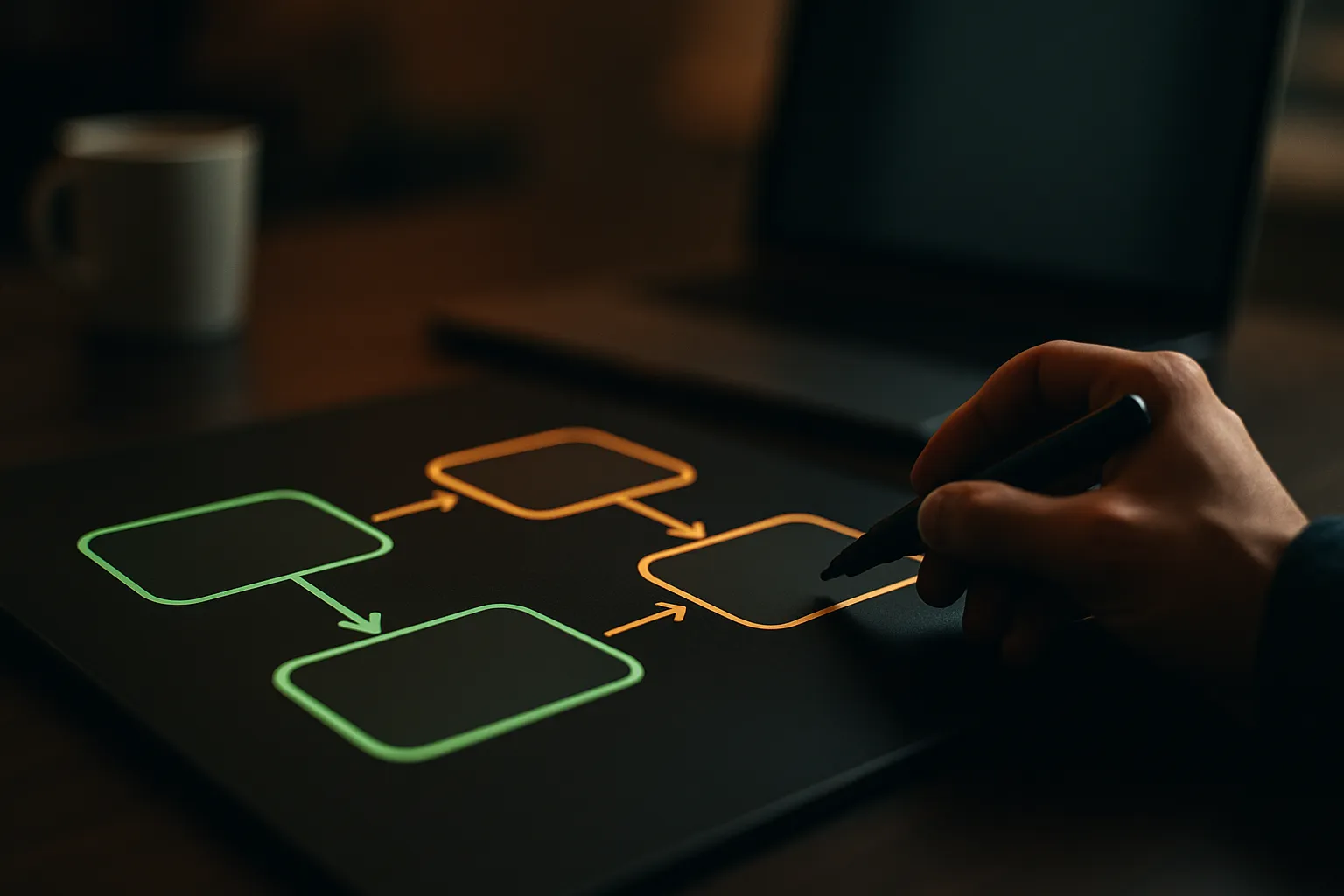
A well-built LinkedIn email multi-channel sequence has five touches across roughly 12–14 days. Here's the structure we use at Ghost and recommend to founders running outbound on the platform.
Step 1 — LinkedIn Connection Request
This is your cold open. Keep the connection note to under 300 characters — LinkedIn's limit — and make it feel human, not templated. Reference something specific: their industry, a content topic they'd care about, or a mutual context.
A good example for a founder selling HR software: "Hi Sarah — I help HR leaders at Series B companies cut time-to-hire by 40%. Thought it'd be worth connecting." That's 110 characters. Specific, relevant, no ask.
Do not pitch in the connection note. Your only goal here is the accept.
Step 2 — LinkedIn First Message
Send this 24–48 hours after the connection is accepted. This is your first real message, and it should do three things: acknowledge the connection, establish relevance, and open a conversation — not close a sale.
Keep it to 3–4 sentences. Something like: "Thanks for connecting, Sarah. I noticed you're scaling the people team at Veritas — we've been helping similar-stage HR leaders automate onboarding without adding headcount. Happy to share what's working if it's relevant to where you're focused."
End with a soft question, not a calendar link. Calendar links in message two kill reply rates.
Step 3 — Email Follow-Up
If there's no reply to your LinkedIn message within 3–4 days, shift channels. This is where email earns its place in the sequence. Your email should reference the LinkedIn interaction — this is what makes it feel coordinated rather than spray-and-pray.
Subject line: "Following up — HR onboarding at Veritas". Body: short, 4–5 sentences, same value proposition, new angle. Maybe lead with a stat or a specific outcome a similar company achieved. End with a single, low-friction CTA: "Worth a 15-minute call this week?"
Step 4 — LinkedIn Check-In
Three to four days after the email, return to LinkedIn with a brief check-in. This isn't a follow-up to your follow-up — it's a pattern interrupt. Comment on something they've posted, or send a short message with a new piece of value: a relevant article, a stat, a question.
"Saw your post about remote onboarding challenges last week — we just published a breakdown of what's working for HR teams at your stage. Happy to send it over if useful."
This touch keeps you visible without being pushy.
Step 5 — Final Email
The last touch comes 4–5 days after the LinkedIn check-in. This is your breakup email — and it should be honest about that. Breakup emails consistently outperform standard follow-ups because they create a natural decision point for the prospect.
"I'll leave it here, Sarah — I don't want to clog your inbox. If the timing's ever right to explore how we're helping HR teams at Series B companies cut onboarding time, just reply to this email. Happy to pick it up whenever."
No hard sell. No desperation. Just a clean close that leaves the door open.
How to do this in Ghost: In Ghost's sequence builder (found under Outbound), click "New Sequence" and select "Multi-Channel." Add each step by choosing the channel (LinkedIn or Email) and the delay in days. Ghost will automatically pause the email steps until the LinkedIn steps have fired, and will skip email steps if the prospect replies on LinkedIn — so you never double-message someone who's already in conversation. You can preview every message in the sequence before it goes live.
How to Set Up the Sequence in Ghost
Setting up a LinkedIn email multi-channel sequence in Ghost takes under 10 minutes once your accounts are connected. Here's the exact flow.
- Go to Outbound → Sequences → New Sequence. Name it something you'll recognise — e.g. "HR Leaders Series B — Q3 2025."
- Select "Multi-Channel" as the sequence type. This unlocks both LinkedIn and email steps in the same builder.
- Add Step 1: LinkedIn Connection Request. Write your note (under 300 characters). Set delay to Day 0.
- Add Step 2: LinkedIn Message. Set delay to "1 day after connection accepted" — Ghost detects the accept and triggers the message automatically.
- Add Step 3: Email. Set delay to 3 days after Step 2. Write your subject line and body. Ghost auto-populates personalisation tokens (first name, company, job title) from the contact database.
- Add Step 4: LinkedIn Message. Set delay to 3 days after Step 3.
- Add Step 5: Email. Set delay to 4 days after Step 4. Write your breakup email.
- Set reply detection: Toggle "Pause on reply" to ON. If a prospect replies at any step, Ghost halts the sequence and surfaces the conversation in your unified inbox.
- Review and launch. Ghost shows you a full preview of every message before anything sends. Approve the sequence, then enrol your contacts.
For AI-assisted sequence building, Ghost's Agentic Campaign Creator can write all five messages for you based on your ICP description — and build the full sequence structure — in under 90 seconds.
How to Connect Gmail or Outlook to Ghost
Before your email steps can fire, you need to connect your sending inbox. Ghost supports both Gmail and Outlook natively — no third-party SMTP setup required.
Go to Settings → Email → Connect Inbox. Select Gmail or Outlook and authorise via OAuth. Ghost will immediately run a deliverability check on your domain and warming score. If your domain is new or cold, Ghost's built-in email warmup tool will begin warming it automatically — this runs in the background and typically takes 2–3 weeks to reach safe sending volumes.
A few things to configure once connected:
- Sending name: Use your full name, not a company name. Emails from "Baz at Grow with Ghost" consistently outperform emails from "Grow with Ghost Team."
- Daily send limit: Ghost defaults to 50 emails/day for new inboxes. Increase this gradually as your warmup score rises — aim for 80–100/day after 3 weeks.
- Signature: Keep it minimal. Name, title, company, one link. Heavy HTML signatures trigger spam filters.
- Tracking: Ghost tracks opens and clicks by default. You can disable open tracking per sequence if you're targeting privacy-conscious audiences (common in GDPR-heavy markets).
For LinkedIn, connect your account under Settings → LinkedIn → Connect Account. Ghost uses a safe API-compliant connection — no browser extensions, no scraping.
Timing and Gap Settings That Actually Work
Timing is where most multi-channel sequences fall apart. Too fast and you look desperate. Too slow and the prospect forgets who you are.
Here's the gap structure we've found performs best based on Ghost's internal data from Q1 2025 campaigns:
Step Channel Trigger Recommended Gap 1 — Connection Request LinkedIn Day 0 — 2 — First Message LinkedIn After accept 1 day after accept 3 — Email Follow-Up Email After Step 2 3–4 days 4 — LinkedIn Check-In LinkedIn After Step 3 3 days 5 — Final Email Email After Step 4 4–5 daysTotal sequence duration: 12–14 days. That's long enough to be memorable, short enough to stay relevant.
One nuance: Ghost lets you set send-time windows per step. Set email steps to send between 07:00–09:30 or 16:00–18:00 in the prospect's timezone — these windows consistently produce higher open rates than midday sends, based on Ghost's internal data. LinkedIn messages perform best sent Tuesday–Thursday, between 08:00 and 10:00.
What to Do When They Reply
When a prospect replies — on either channel — Ghost automatically pauses the sequence and routes the conversation to your unified inbox. You'll see the full context: which step triggered the reply, the prospect's LinkedIn profile, their intent score, and every prior message in the thread.
From there, the play depends on the reply type:
- "Interested, let's chat": Move fast. Reply within the hour if you can. Drop a Calendly link or propose two specific times. Don't overthink the response.
- "Not the right time": Ask when would be better and set a reminder. Ghost lets you snooze the contact and re-enrol them in a new sequence at a future date.
- "Not relevant to me": Thank them, ask if there's a better person to speak to, and update the contact record. One referral from a polite "no" is worth five cold outreach sessions.
- No reply after all five steps: Move the contact to a nurture list. Ghost can tag them automatically and add them to a content engagement audience — so they keep seeing your LinkedIn posts even if they didn't reply to the sequence.
The reply is the beginning of the sales process, not the end of the outreach process. Treat it accordingly.
How to do this in Ghost: In your Ghost inbox, filter by "Replied" to see all active conversations from your sequences. Use the "Snooze" function to resurface a contact in 30, 60, or 90 days. Tag contacts as "Nurture," "Hot," or "Referred" — these tags feed directly into your Outbound audience filters so you can build targeted re-engagement campaigns later. Active deals belong on your built-in Pipeline, where reminders make sure they don't go cold.
Frequently Asked Questions
What is a LinkedIn email multi-channel sequence?
A LinkedIn email multi-channel sequence is a coordinated outreach flow that combines LinkedIn connection requests, direct messages, and email follow-ups into a single automated campaign. Rather than using LinkedIn and email separately, a multi-channel sequence times each touchpoint across both platforms to maximise reply rates and prospect familiarity. Tools like Ghost manage the full sequence in one builder, including reply detection and automatic pausing.
How many touches should a LinkedIn + email outreach sequence have?
Most high-performing B2B outreach sequences have between four and six touches across 10–14 days. A five-step sequence — LinkedIn connection, LinkedIn message, email, LinkedIn check-in, final email — hits the right balance between persistence and respect for the prospect's inbox. Sequences with more than seven touches in under two weeks typically see diminishing reply rates and increased unsubscribe or block rates.
Is it safe to automate LinkedIn outreach?
Automating LinkedIn outreach is safe when done through platforms that use LinkedIn's official API and respect the platform's weekly connection limits (around 100 per week). Ghost connects to LinkedIn via a compliant integration — no browser extensions or scraping — which keeps your account within LinkedIn's terms of service. Avoid tools that simulate browser behaviour or send connection requests in bulk bursts, as these risk account restrictions.
How do I write a LinkedIn connection request that gets accepted?
Keep your connection note under 300 characters, reference something specific about the recipient's role or industry, and make zero ask. The goal of the connection note is purely to get the accept — not to pitch. A note like "Hi Sarah — I work with HR leaders at Series B companies on time-to-hire. Thought it'd be worth connecting" is specific, relevant, and non-intrusive enough to generate strong accept rates.
What email sending limits should I use for cold outreach?
For a new or recently warmed domain, start at 30–50 emails per day and increase gradually over 3–4 weeks. Sending too many emails too quickly from a cold domain damages your sender reputation and increases the chance of landing in spam. Ghost's built-in email warmup tool automates this process, gradually increasing your sending volume while monitoring deliverability signals in the background.
What should I do if a prospect doesn't reply to any step in my sequence?
If a prospect completes all five steps without replying, move them to a long-term nurture list rather than re-enrolling them in the same sequence immediately. Tag them for re-engagement in 60–90 days, and in the meantime ensure they're seeing your LinkedIn content — organic content keeps you visible without requiring a direct outreach touch. Ghost lets you tag non-responders automatically and build re-engagement campaigns targeting them at a future date.
Why does multi-channel outreach outperform single-channel?
Multi-channel outreach outperforms single-channel because different prospects have different communication preferences, and seeing your name across multiple platforms builds familiarity faster than a single channel can. Research by Outreach.io shows multi-channel sequences generate up to 3x more replies than LinkedIn-only or email-only campaigns. The key is coordination — messages across channels should feel like a coherent conversation, not independent cold approaches.
Can I personalise email steps in a Ghost sequence automatically?
Yes. Ghost automatically populates personalisation tokens — first name, company name, job title, industry — from its 600M B2B contact database into every email step in your sequence. Ghost's Agentic Campaign Creator can also write fully personalised sequence copy based on your ICP description, using Claude to generate messages that reflect the prospect's role and likely pain points. You review and approve every message before anything sends.
Start Building Your Multi-Channel Sequence Today
You don't need a separate LinkedIn tool, a separate email platform, and a spreadsheet to hold it together. Ghost gives you the contact database, the sequence builder, the email infrastructure, and the LinkedIn integration — all on one plan, for $99/month.
If you're ready to run outbound that actually converts, explore Ghost's multi-channel outbound features or jump straight into the Agentic Campaign Creator to build your first sequence in under 90 seconds. And if you want to see how Ghost's email sequences work end to end, that's a good place to start.
Start your free 7-day trial — no credit card required. Build your first LinkedIn + email sequence today and see what coordinated, intent-powered outbound looks like in practice.