

The LinkedIn Relationship Ladder: Why Jumping Straight to the Pitch Kills Your Pipeline

The LinkedIn Relationship Ladder: Why Jumping Straight to the Pitch Kills Your Pipeline
Most outreach skips 4 steps and wonders why no one buys.
The psychology of buying isn't complicated — but most founders ignore it completely. They treat LinkedIn like a broadcast channel where you can shout your way to revenue.
That's like proposing on a first date. Technically possible. Socially catastrophic.
The founders winning right now aren't the loudest. They're the most consistent. They understand that every interaction on LinkedIn either moves someone up the relationship ladder, or it doesn't. There's no neutral ground.
You're either building trust or burning it.
The Mistake Everyone Makes (Jumping from Aware to Buy)
Here's what 90% of LinkedIn outreach looks like:
"Hi Baz Furby, I noticed you're a [Title] at Grow with Ghost. We help companies like yours increase revenue by 40%. Interested in a quick call?"
This message assumes the prospect has jumped from "I've never heard of you" straight to "I'm ready to buy from you." It's delusional.
The sender has skipped four critical relationship stages. They've gone from zero to sales pitch without building any foundation of trust, familiarity, or credibility.
When this approach fails (which it does 98% of the time), most founders double down. They send more messages. They get louder. They add more "personalisation" by mentioning the prospect's company golf day.
But volume doesn't solve a positioning problem. If your LinkedIn outreach strategy treats prospects like walking wallets instead of humans with complex decision-making processes, more messages just means more people blocking you.
The real issue isn't your message. It's your understanding of how relationships actually develop.
The Cold Truth About LinkedIn Sales
LinkedIn isn't a shortcut to revenue. It's a relationship-building platform that happens to generate sales when you use it correctly.
Every successful B2B sale follows the same psychological progression. People don't buy from strangers. They buy from people they know, like, and trust.
But trust isn't binary. It's built incrementally, through consistent value delivery and genuine relationship building. Skip the steps, and you skip the sale.
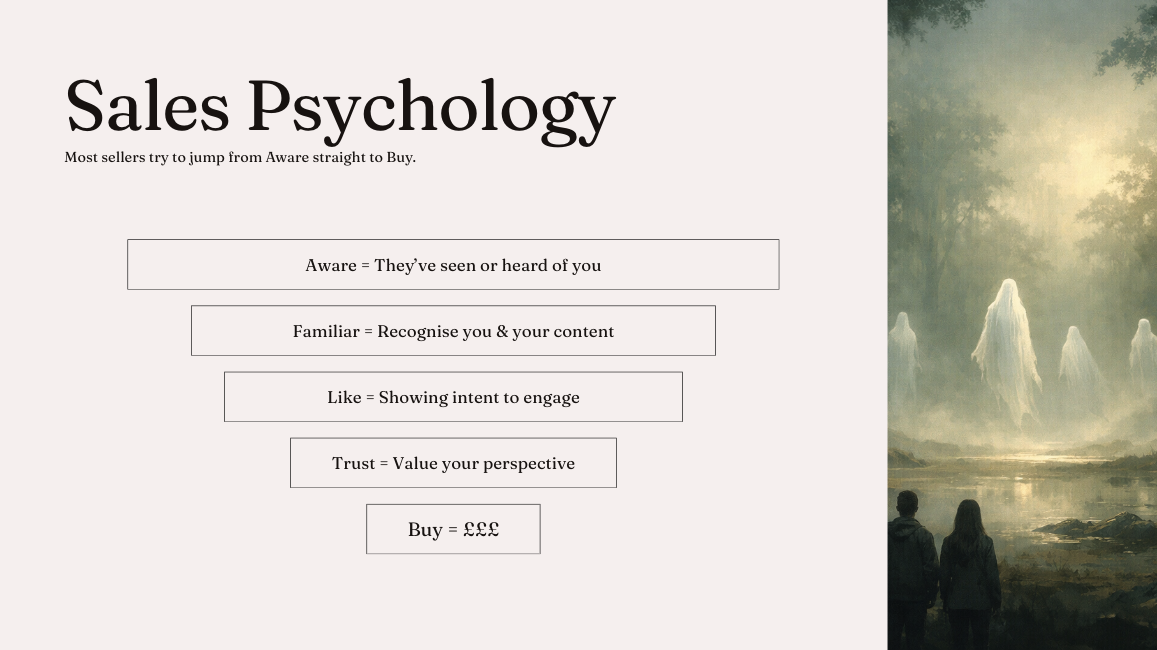
The Five Rungs of the Relationship Ladder
Every prospect relationship follows the same predictable progression. Think of it as a ladder with five rungs:
1. Aware — They've Seen or Heard of You
This is ground zero. Your prospect knows you exist, but that's about it. Maybe they've seen your name in their LinkedIn feed once. Maybe a mutual connection mentioned you in passing.
At this stage, any direct sales approach feels invasive. You're a stranger trying to sell them something. The natural response is to ignore or block.
Most founders spend all their energy trying to get people aware of them, then immediately jump to the pitch. It's like meeting someone at a networking event and immediately asking them to marry you.
2. Familiar — They Recognise Your Content
Now they've seen your content multiple times. Your name is familiar. They might not engage yet, but they're not surprised to see you in their feed.
This is where LinkedIn content strategy becomes crucial. Consistency beats brilliance at this stage. You need to show up regularly with valuable insights that demonstrate your expertise.
The goal isn't viral posts. It's building familiarity through repeated, valuable interactions.
3. Like — They're Showing Intent to Engage
This is the first rung where prospects take action. They like your posts, leave comments, or share your content. They're signalling interest in your perspective.
This is also where most founders make their second mistake. They see a like or comment and immediately slide into DMs with a pitch.
But engagement isn't a buying signal. It's an interest signal. The prospect likes your content, not necessarily your product.
4. Trust — They Genuinely Value Your Perspective
Now you've moved from "interesting content creator" to "trusted advisor." They actively seek out your opinions. They tag you in relevant discussions. They share your content with their network.
This is where LinkedIn relationship building pays dividends. The prospect sees you as a valuable resource, not just another vendor.
At this stage, you can start introducing your solution — but still as education, not as a pitch.
5. Buy 💰
The final rung. They're ready to have a commercial conversation. They trust your expertise, value your perspective, and believe you can solve their problem.
When someone reaches this rung, the "sales conversation" feels natural. You're not pushing your solution on them — they're pulling it from you.
The beautiful thing about this approach? By the time you have a sales conversation, half the selling is already done.
Why LinkedIn Isn't a Broadcast Channel
Most founders treat LinkedIn like a billboard. They post their message and hope someone sees it and buys.
But LinkedIn is fundamentally different from traditional advertising channels. It's not about reach or impressions. It's about relationships and trust.
Think about how you actually use LinkedIn. Do you scroll through your feed looking for products to buy? Of course not. You're looking for insights, connections, and valuable content from people you trust.
Your prospects are doing exactly the same thing.
The Relationship-First Approach
When you understand LinkedIn as a relationship platform, your entire approach changes. Instead of optimising for immediate sales, you optimise for long-term trust building.
This means your B2B LinkedIn sales strategy focuses on moving people up the ladder, not jumping straight to the top rung.
Each piece of content serves a specific purpose in the relationship progression. Early content builds awareness and familiarity. Later content demonstrates expertise and builds trust.
The sales conversations happen naturally when prospects are ready, not when you need to hit your quarterly targets.
The Compound Effect of Relationship Building
Here's what most founders miss: relationship building compounds.
When you focus on moving people up the ladder consistently, you're not just building individual relationships. You're building a reputation. People start referring others to your content. Your reach expands organically.
A broadcast approach has linear returns. More posts might equal more views. But a relationship approach has exponential returns. Better relationships lead to referrals, word-of-mouth, and inbound interest.
Every Post Either Moves Someone Up a Rung or It Doesn't
This is the filter every piece of LinkedIn content should pass through: does this move my target audience up the relationship ladder?
If the answer is no, don't post it.
Most LinkedIn content fails this test spectacularly. Company announcements, product features, and generic motivational quotes don't build relationships. They're just noise.
Content That Builds Awareness and Familiarity
At the bottom of the ladder, people need to understand who you are and what you stand for. This content should be educational, opinionated, and valuable.
Share frameworks, challenge conventional wisdom, and provide actionable insights. The goal is to establish your expertise and unique perspective.
Avoid anything that sounds like marketing copy. At this stage, people are deciding whether you're worth following, not whether they want to buy from you.
Content That Generates Likes and Engagement
Once people are familiar with you, you need content that encourages interaction. Ask questions, share controversial opinions, and create content that begs for comments.
The more someone engages with your content, the more LinkedIn's algorithm shows them your future posts. You're building a feedback loop of familiarity and engagement.
But remember: engagement for engagement's sake is worthless. You want engagement from your ideal prospects, not just anyone.
Content That Builds Trust
This is where you demonstrate deep expertise and provide genuine value. Case studies, detailed frameworks, and behind-the-scenes insights work well here.
People at this stage are evaluating whether you actually know what you're talking about. Surface-level content won't cut it.
Share your failures alongside your successes. Show your thinking process. Be vulnerable about your challenges. This builds the kind of trust that leads to business relationships.
What Consistency Actually Looks Like
Everyone talks about being "consistent" on LinkedIn. But most people confuse consistency with frequency.
Posting every day isn't consistency if your content is all over the place. Real consistency means consistently moving your audience up the relationship ladder.
This requires a content strategy that serves each stage of the ladder, published on a schedule your audience can rely on.
The Consistency Trap
Most founders start strong. They post valuable content for a few weeks, see some engagement, then gradually drift towards promotional content.
By month three, their feed looks like a company newsletter. Product updates, team announcements, and thinly-veiled sales pitches.
This backwards progression moves people down the ladder. You go from trusted advisor back to annoying vendor.
True consistency means maintaining the same value-first approach for months and years, not just until you get bored or desperate for leads.
The Long Game Advantage
Here's what separates successful LinkedIn strategies from failed ones: time horizon.
Most founders expect results in weeks. They post for a month, see limited immediate pipeline, and conclude LinkedIn doesn't work.
But LinkedIn trust building is a 6-12 month process minimum. The founders who win are playing a completely different game. They're building relationships that will pay dividends for years.
When you commit to this timeline, your entire approach changes. You stop optimising for immediate results and start optimising for long-term relationship building.
The SaaS Founder Who Stopped Pitching and Started Winning
Let me share a story that perfectly illustrates the relationship ladder in action.
A SaaS founder I know had been posting promotional content for six months straight. Product demos, feature announcements, customer testimonials. Professional content, well-designed, posted consistently.
Zero pipeline from LinkedIn. Not a single qualified conversation.
He was stuck at the bottom of the relationship ladder. People were aware of him, but his content was pushing them away rather than pulling them up.
The Pivot
Instead of posting about his product, he started sharing the insights he'd gained building it. The mistakes he'd made. The frameworks he'd developed. The contrarian opinions he'd formed.
He stopped talking about what his software could do and started talking about the problems it solved. Not as sales pitches, but as educational content.
Within two weeks, engagement on his posts doubled. People were commenting, sharing, and asking follow-up questions.
The Results
By week 8, inbound conversations had started flowing organically. Prospects were reaching out to him, not the other way around.
The beautiful part? He hadn't changed his audience, his offer, or his positioning. Just his approach to LinkedIn pipeline generation.
Instead of trying to move people from Aware to Buy in a single post, he focused on moving them up one rung at a time.
Six months later, LinkedIn was his primary lead generation channel. Not because he was posting more, but because he was building relationships more effectively.
How to Use Ghost to Climb the Ladder Faster
The relationship ladder works, but it requires the right tools to execute effectively. You need to create consistent, valuable content while tracking which prospects are moving up each rung.
This is where Ghost's unique approach to LinkedIn content creation and intent-powered outbound becomes powerful.
Content That Builds Relationships
Ghost's AI content creation helps you maintain the consistency required for effective relationship building. Instead of staring at a blank screen every morning, you have a system that generates ideas, frameworks, and posts that move people up the ladder.
The content isn't generic. It's trained on your expertise, your industry, and your unique perspective. This means every post reinforces your position as a trusted advisor, not just another content creator.
More importantly, Ghost helps you avoid the consistency trap. The content stays valuable and educational, even when you're tempted to pitch your latest feature.
Intent Scoring That Shows You Where People Stand
Here's the problem with the relationship ladder: it's invisible. You can't tell where each prospect sits just by looking at your LinkedIn feed.
Ghost's 5-dimensional intent scoring changes this. It tracks engagement patterns, content interaction, and profile visits to show you exactly where each prospect stands on the ladder.
Someone who likes every post but never comments is at the "Like" stage. Someone who shares your content and tags you in discussions is approaching "Trust." The scoring makes the invisible visible.
Outbound That Respects the Ladder
Traditional LinkedIn outbound treats everyone the same. Ghost's approach is different. The outbound sequences adapt based on where someone sits on the relationship ladder.
People at the "Aware" stage get educational content and value-first messaging. People at the "Trust" stage get more direct, solution-focused outreach.
This means you're never jumping rungs. Every message moves people up the ladder at the right pace, not at your preferred pace.
The Compound Effect
When you combine consistent, relationship-building content with intent-aware outbound, something powerful happens. Your content engagement becomes your outbound pipeline.
People who engage with your posts become warm leads for outreach. But instead of pitching them immediately, Ghost helps you nurture them up the relationship ladder until they're ready for a commercial conversation.
This creates a compound effect. Better content leads to more engagement. More engagement leads to warmer outbound. Warmer outbound leads to better conversations. Better conversations lead to more sales.
The relationship ladder isn't just a framework — it's a systematic approach to turning LinkedIn into your primary growth channel.
Ready to stop jumping straight to the pitch and start building relationships that convert? Start a free 7-day trial at Ghost — no credit card required. See how the relationship ladder works when you have the right tools to climb it.



Ready to Grow?
Grow with Ghost.



.png)